Samuel Alito has been staunch conservative on U.S. Supreme Court
A leaked draft opinion striking down Roe v. Wade put Justice Samuel Alito at the center of the country's biggest legal fight, capping 16 years as one of the court's most reliably conservative votes.
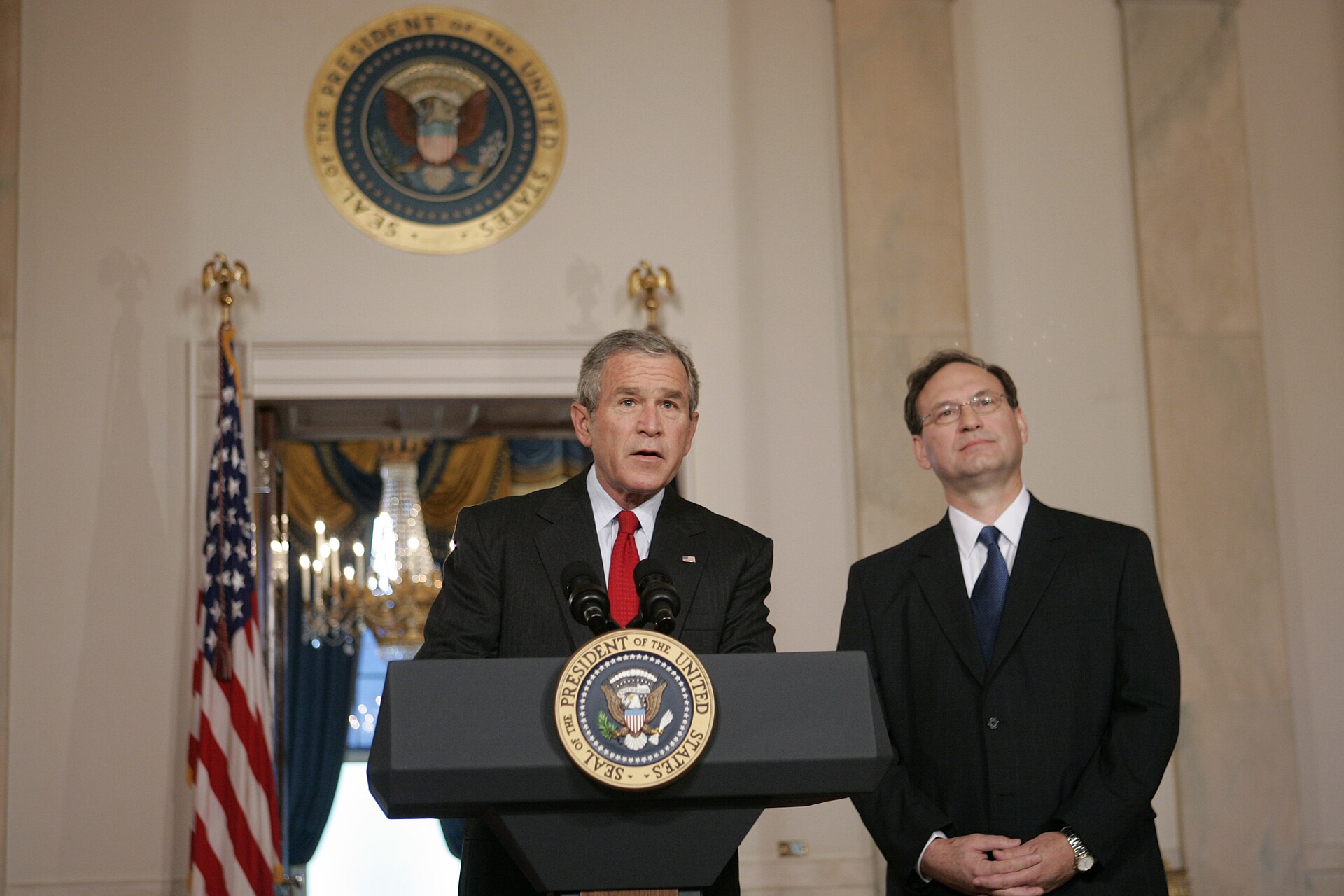
Justice Samuel Alito has established himself as a consistently conservative voice during his 16 years on the U.S. Supreme Court, opposing abortion rights and LGBT protections while championing religious liberty and gun rights. That record moved to the center of national attention after a leaked draft opinion, authored by Alito, showed the court poised to eliminate the constitutional right to abortion established by Roe v. Wade in 1973 in a case out of Mississippi.
Alito, 72, was appointed to the court by President George W. Bush in 2006. He filled the seat vacated by retiring Justice Sandra Day O'Connor only after Bush's initial pick for the seat, Harriet Miers, withdrew from consideration following opposition from conservatives. The Senate confirmed Alito on January 31, 2006, by a vote of 58-42, according to a Reuters account of his tenure and independently confirmed by a Senate-vote history published by Confirmation Tales. Four Democrats crossed over to vote for confirmation; one Republican voted against it.
Precisely how the draft opinion made its way out of the court, and who was responsible, has not been established in the sourcing reviewed for this account. The leak itself was an unusual breach of the court's secrecy around unpublished opinions, and coverage at the time did not resolve who leaked the document or why.
A record built case by case
The Reuters profile of Alito's tenure traces a consistent pattern across the major cases that have defined his time on the bench. On abortion, Alito has repeatedly dissented as the court preserved abortion rights in recent years, striking down Texas restrictions in 2016 and Louisiana physician restrictions in 2020. In one dissent cited in that coverage, Alito wrote that "the abortion right recognized in this court's decisions is used like a bulldozer to flatten legal rules."
On religious liberty, Alito authored the court's 2014 opinion in the Hobby Lobby case, which allowed closely held corporations to claim religious objections to the Affordable Care Act's contraceptive coverage mandate. On gun rights, a 2010 ruling he wrote extended Second Amendment protections to state and local laws. He also dissented in 2021 when the court preserved the Affordable Care Act against a Republican-led challenge.
Where Alito sits on today's court
The Supreme Court that weighed the Mississippi abortion case held a 6-3 conservative majority, with Alito and Justice Clarence Thomas identified in the Reuters account as its most conservative members. Alito's path to the bench began with degrees from Princeton University and Yale Law School, followed by service as a federal prosecutor and as a federal appellate judge before his Supreme Court appointment, according to that same reporting.
The Senate's debate over Alito's nomination in 2005 and 2006 centered on his judicial philosophy and his record as an appellate judge, with Democrats raising objections that ultimately were not enough to block confirmation. A separate historical account of the vote notes that 19 Democrats declined to support a filibuster effort against the nomination led by Senator John Kerry, a decision framed at the time as an attempt by those senators to avoid appearing obstructionist to their own constituents rather than an endorsement of Alito.
What the moment signals
Sourcing reviewed for this account frames Alito's confirmation, in hindsight, as a turning point for the conservative legal movement: proof that a Republican Senate majority could confirm a nominee with a clearly documented conservative record even after the Miers nomination collapsed under pressure from the same movement. The leaked draft opinion, arriving 16 years into Alito's tenure, represented the culmination of that same judicial philosophy applied to the single issue — abortion — that had shadowed his nomination from the start. What remains unconfirmed in the sourcing here is the eventual final form of the opinion and how, if at all, it would change between the leaked draft and any official release; a draft opinion is not a final ruling, and the coverage reviewed for this piece describes it strictly as a draft.
US In News compiled this archived account from contemporaneous coverage by Reuters and Ballotpedia's Confirmation Tales newsletter. It restores a story originally published on this site in May 2022; figures are as reported at the time.