Working 55 or more hours a week significantly raises risk of stroke and heart disease death, WHO and ILO find
The first global study of its kind links long working hours to 745,000 deaths in 2016 alone, a toll the two UN agencies say has been rising for two decades.
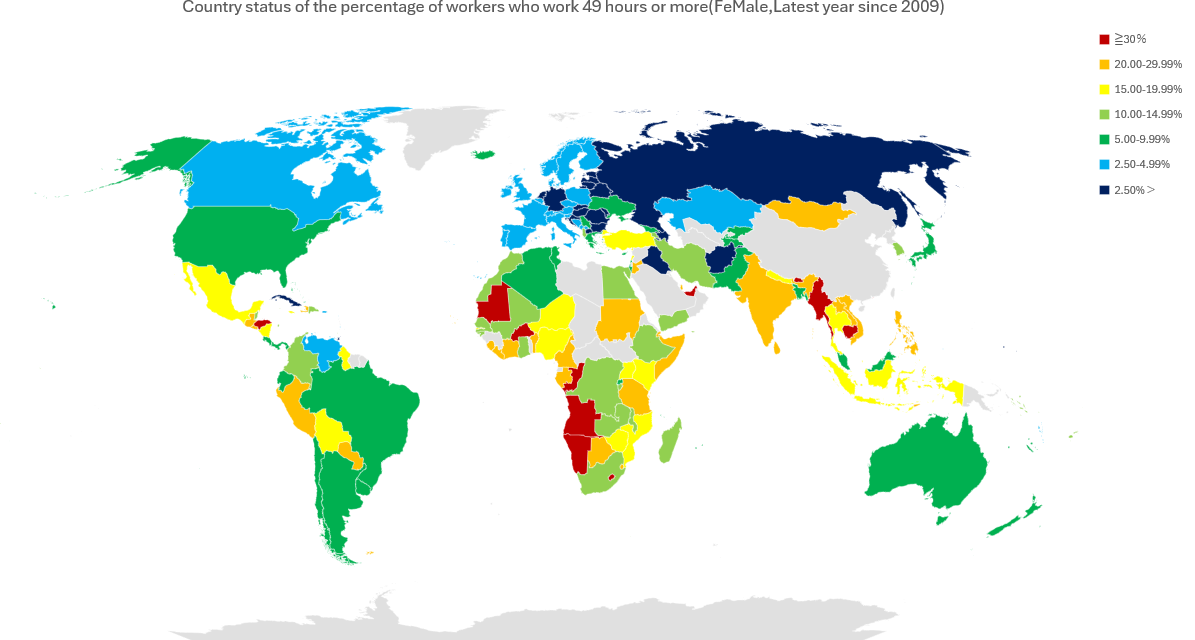
Working 55 hours or more a week is associated with a 35% higher risk of stroke and a 17% higher risk of dying from ischemic heart disease compared with working 35 to 40 hours a week, according to a joint study published by the World Health Organization and the International Labour Organization on May 17, 2021.
The study attributed 745,000 deaths from stroke and ischemic heart disease in 2016 to long working hours, a toll the two agencies said had risen 29% since 2000. Of that total, 398,000 deaths were from stroke and 347,000 from heart disease, according to the WHO. WHO Director-General Dr. Tedros Adhanom Ghebreyesus said, "No job is worth the risk of stroke or heart disease. Governments, employers and workers need to work together to agree on limits to protect the health of workers."
The WHO described the analysis as the first global study of its kind, synthesizing data from 37 studies covering more than 768,000 participants for the heart disease findings and 22 studies covering more than 839,000 participants for the stroke findings, drawing on more than 2,300 surveys collected across 154 countries between 1970 and 2018.
Who is most affected
The WHO reported that 72% of the deaths linked to long working hours occurred among men, and that most of those who died had worked 55 or more hours per week between the ages of 45 and 74 before dying, typically between ages 60 and 79 — a pattern the agencies said reflects a lag between the exposure to long hours and the fatal cardiovascular event. The WHO estimated that around 9% of the global population was working 55 hours or more per week at the time of the study.
The agencies' framing
Dr. Maria Neira, director of WHO's Department of Environment, Climate Change and Health, said, "Long working hours can lead to premature death," and called for coordinated action among governments, employers and workers. The joint report came as the WHO and ILO noted that the trend toward longer working hours has been compounded by the COVID-19 pandemic, which the agencies said may have accelerated developments that could increase the risks associated with long working hours.
US In News compiled this archived account from contemporaneous coverage of the WHO/ILO study, published directly by the World Health Organization. It restores a story originally published on this site in May 2021; figures are as reported at the time.