Trump at Bedminster: what the president actually said about the American troops killed in Jordan
Broadcast coverage of the president's weekend in New Jersey caught his remarks on the dead in fragments - and put the American death toll at 16, 17 or 18 depending on the outlet.
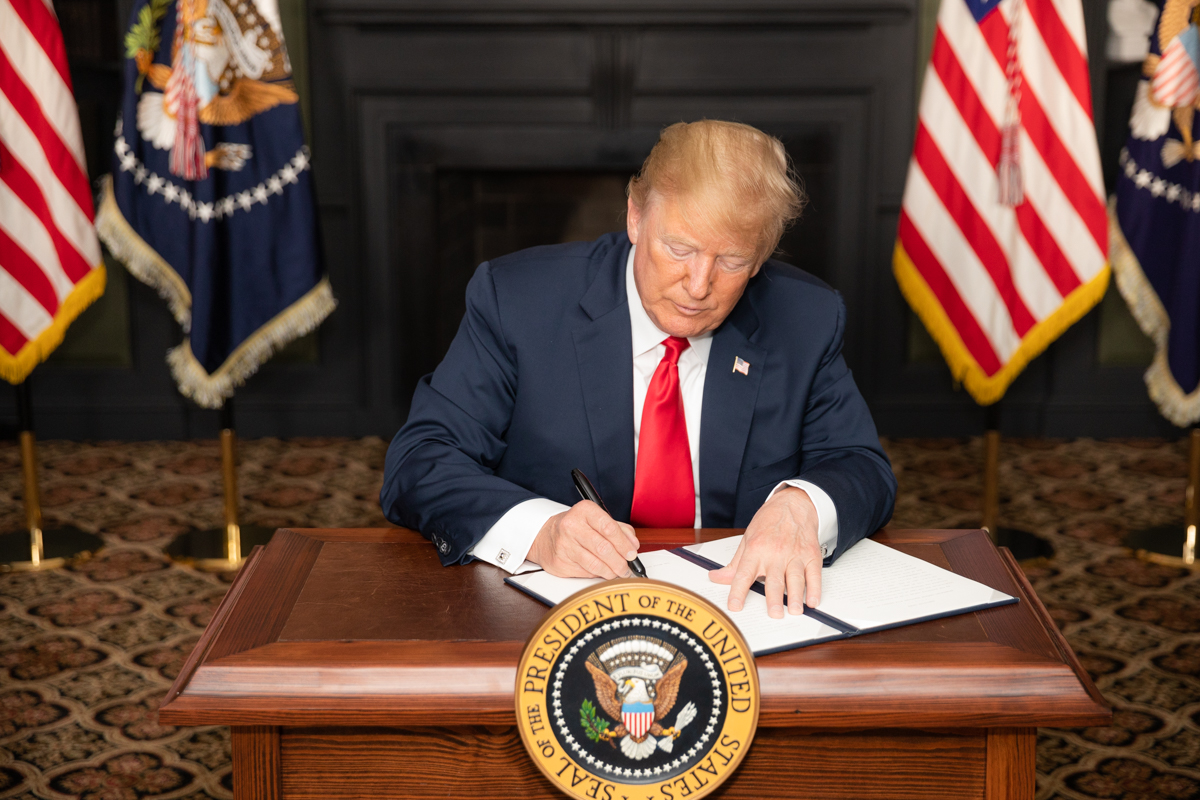
In the days after a drone and missile attack on a base in Jordan killed two American service members and left a third missing, the record of what President Trump said about the fallen troops exists largely in fragments captured by reporters - a phone call reported by CBS, remarks to reporters reported by ABC, and a quote given to a newspaper. Taken together, those fragments carry a consistent message, and the outlets that carried them do not agree on how many Americans have now died.
CBS Evening News correspondent Torian Small, reporting from Bridgewater, New Jersey while traveling with the president, said the US was confirming remains were found at the site of the Iranian strike in Jordan that killed two American troops on Friday — the location where US Central Command had previously said another service member was missing. Separately, Small reported, another US soldier was killed on Saturday after looking to detonate a downed Iranian drone in Iraq. NBC's Keir Simmons, reporting from Jordan, said US Central Command identified the two killed in the weekend attacks as 25-year-old First Lieutenant Tyler James Feehan and 19-year-old Private Isabella Gonzalez, and said the military had found unidentified remains of a third person at the site.
The casualty figure is where the coverage diverges, and it should be reported as unresolved. ABC's Good Morning America, citing the Department of Defense, said that so far in the war "16 American troops have been killed and more than 400 wounded." NBC put the number of US dead since the start of the war at "at least 17." ABC's Martha Raddatz, reporting from Jordan for World News Tonight, framed it conditionally: if the recovered remains are those of the missing service member, "that brings the American death toll since the war began to 18." The spread - 16, 17 or 18 - turns on whether the missing service member and the Iraq drone fatality are counted, and on which tally an outlet is using. No single number should be treated as settled.
What changed: the president stopped being the source
The mechanism worth noticing is not that the president said nothing. It is that what he said about the deaths reached the public secondhand, through channels he did not convene. CBS Evening News placed the president in Bridgewater, New Jersey over the weekend, with correspondent Torian Small reporting from there while traveling with him.
CBS's Small reported that in a phone call with NewsNation the president said he "couldn't care less" about Iran's announcement that it would no longer abide by the memorandum of understanding.
ABC's World News Tonight reported that the president attended the World Cup final that afternoon, and that he spoke only of those killed in the latest attacks, telling reporters on Saturday that the deaths in Jordan were a very sad thing and a shame. ABC's Good Morning America reported the president's response to the deadly attack as a quote given to the New York Post - a newspaper, not a briefing. Separately, ABC's chief Washington correspondent Jonathan Carl told GMA viewers he would be interviewing Energy Secretary Chris Wright on This Week amid rising gas prices and continued US attacks on Iran.
The framing: three versions of one sentence
What is striking about the president's recorded remarks is how little they vary. In each version captured by a different outlet, an expression of regret is followed immediately by the same justification. ABC's Good Morning America reported him telling the New York Post:
It's a shame, but in this case, they died because they don't want to see Iran have a nuclear weapon and they don't want to see the Middle East blown up.
NBC's broadcast carried audio on the same construction - "We hit them very hard again tonight. And we did that in honor of the probably three. It's probably three as opposed to two. Great patriots" - followed by: "We feel very badly, but you know, those great people, those great patriots were out there fighting that Iran cannot have a nuclear weapon."
ABC's Carl described the same formulation as policy rather than reaction, saying "the official line from the president himself is that the most important thing is that Iran must never get a nuclear weapon." CBS reported that in Washington the president was pushing to add Iran to Congress's plan for Russian sanctions, tying two wars to one bill, with Alabama Republican Senator Katie Britt making the case that "the very same people that are funding Russia and funding Putin's war of aggression are the very same people funding Iran."
What it signals
No single broadcast said this, but reading them side by side, the pattern is that condolence and rationale have been fused into a single sentence that cannot be reported without also reporting the war aim. Each time a reporter reached the president - by phone, in remarks to reporters, through a newspaper - the answer arrived in the same shape.
The second signal is that the disagreement over the death toll is structural rather than careless. The figures move because the underlying facts were still moving: remains found but not identified, a death in Iraq that occurred during a controlled detonation rather than an attack, and a missing service member whose status determines whether the number is 17 or 18. Readers encountering three different totals in one news cycle are seeing an unresolved count, not competing errors.
US In News compiled this account from broadcast coverage by CBS Evening News, NBC's Today, ABC's Good Morning America and ABC World News Tonight, all published within roughly 48 hours. Figures are as reported and may change.