A physics explainer takes aim at Elon Musk's double-slit reading, and at the explainer format itself
The video argues the most-repeated version of the experiment is wrong, then rests its own case on a faster-than-light update it says no one is researching.
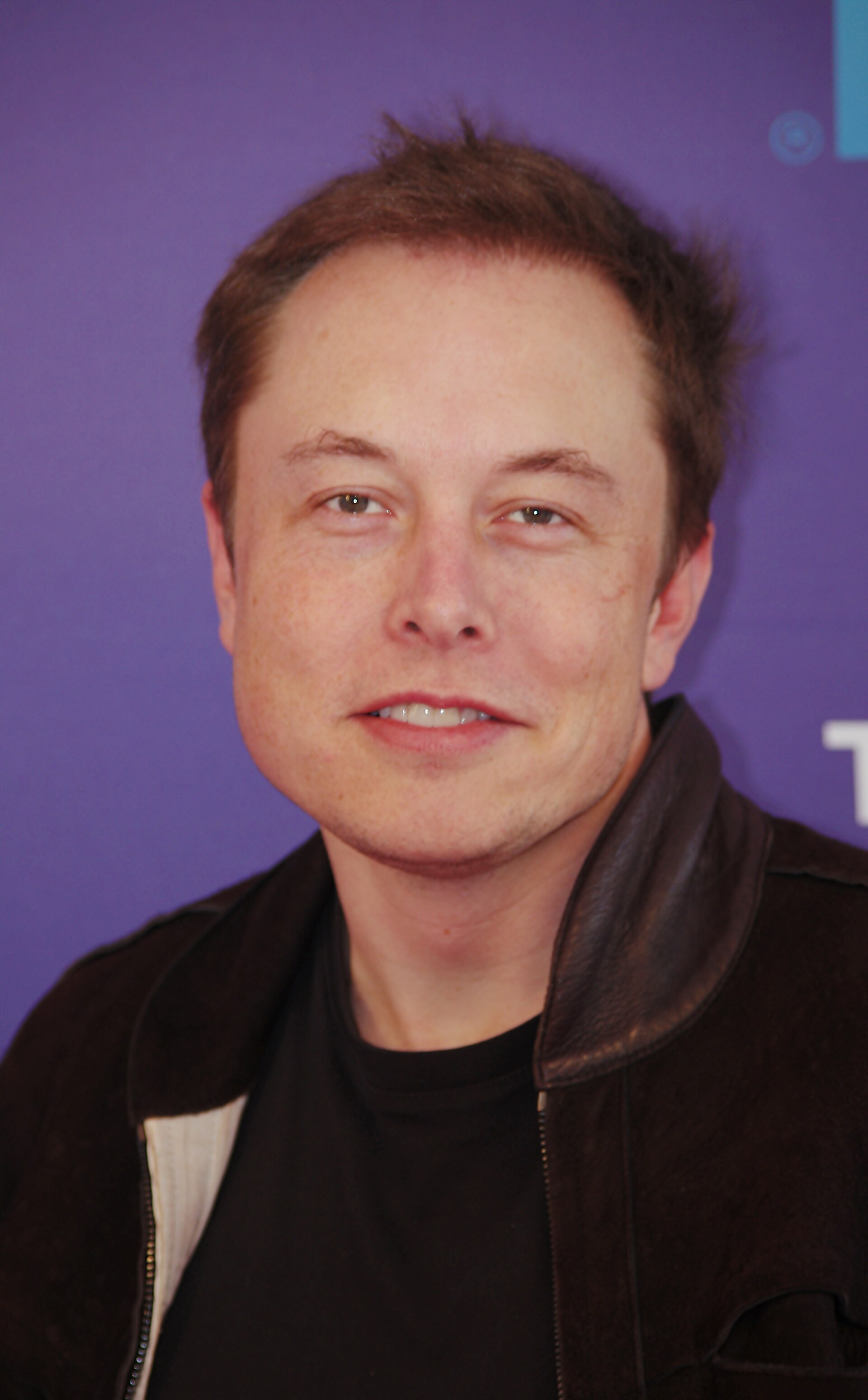
A physics explainer video circulating on YouTube opens by promising to explain "why it confuses even physicists, what the double slit experiment has to do with Einstein's spooky action, what Elon Musk got wrong about it, and why Sabine is permanently grumpy" — and then spends most of its runtime arguing that the single most repeated version of the experiment, the one taught in popular science segments, is wrong. The presenter's claim is blunt: the widely told story that observing which slit a particle passes through makes it "stop behaving like waves or form two stripes on the screen" is, in the video's words, something that "just never happens."
In the video's account, a particle whose path is observed still behaves as a wave — "it's just that it's now wave that goes through only one slit" — producing a diffraction pattern rather than a hard stripe. Observing the particles, the presenter says, does not give two stripes but "an overlap of the two diffraction patterns." What genuinely changes is that observers no longer get interference from both slits, only "a sum of left slit and right slit." The mathematical reason offered is that with two slits you add the wave functions but take the absolute square for probability, and "the square of the sum is not the sum of the squares," leaving an extra interference term.
What the video does not settle — and explicitly declines to settle — is which of two uncomfortable options physics should accept. US In News found no second cached broadcast in the reviewed transcript set that independently corroborates or disputes the video's characterization of Musk's remarks; a query of the transcript index for the Musk simulation-hypothesis claim returned only passages from this same video. The video says only that Musk "recently" made the comment, and does not date or link it. The only other physics explainer in the same cached set, a segment on a repulsive-gravity proposal, covers different research entirely and offers no cross-check on the double-slit claims. Neither cached file carries a channel name or upload date, so this account does not name the presenter.
What the video says the real puzzle is
The presenter relocates the surprise from the moment of measurement to the timing of the decision to measure. The setup described: send a particle, place a detector at one slit, and then choose whether to switch the detector on "after the particle left the source and before it appeared on the screen." If the detector is turned on, the video argues, the particle's wave function "must suddenly update on both slits" — jumping from a state passing through both to one that "either goes left or goes right, but not both" — and "that update is instantaneous, faster than light." This, the presenter says, is what Einstein called a spooky action at a distance.
The video presses the point further with the null case: the update happens even when nothing triggers the detector, because a silent detector still tells you the particle took the other slit. "You didn't touch the particle. It just knew you were trying to," the presenter says.
The stated alternative is superdeterminism — the position that the particle "knows whether you'll measure it before you've made the decision whether to measure it or not." The video frames this as a forced choice: accept a faster-than-light update, or accept "that the future's fully determined already." It also disposes of two side claims, saying measurement need not involve a conscious observer because "some apparatus will do," and that momentum is conserved in every single run because the particle becomes entangled with the double slit itself — if the particle takes a small momentum kick one way, "the screen gets a little kick into the other direction," a kick too small to measure because the double slit is so much heavier than a single particle.
The Musk objection, in three parts
The video quotes Musk's position on the experiment as: "It's consistent with the simulation hypothesis. Like a video game, objects generated with positional certainty only when observed." The rebuttal is delivered in three moves. First, that no one knows what the simulation hypothesis means — "This is why everything is compatible with it" — invoking Wolfgang Pauli's formulation: "It's not even wrong, as Pauli said so aptly."
If it were the case that particles in a double slit experiment were indeed generated like in video games, that is following a deterministic algorithm, that would contradict the current standard interpretation of quantum mechanics. And I'd really like to know the algorithm.
The second objection is that video-game objects are typically pseudo-random rather than truly random, "because the only truly random processes are quantum mechanics." The third is narrower and technical: "it's not true that measuring an object gives it position a certainty. That depends on what you measure. If you measure momentum, then it's the momentum that obtained certainty, not the position."
What it signals about the explainer economy
The more interesting thing about this video is structural rather than physical. It is a science explainer whose main product is the correction of other science explainers — a format that only becomes commercially viable once enough popular quantum content exists to generate a steady supply of errors. The presenter says as much: the reason for the persistent grumpiness is that "most of the talk about why quantum mechanics is supposedly weird is just nonsense and each time I look, there's more nonsense."
That correction economy has a cost the video names directly. The claim is that the volume of misdirected wonder is "why we aren't making any headway on the one real problem, namely how is the instantaneous update of the wave function compatible with Einstein's speed of light limit" — described as "a perfectly obvious research problem that basically no one's working on despite the fact that it's the one topic that could actually return the foundations of physics to relevance." That is an unusually strong charge about the state of a research field, and the video offers no citation, funding figure, or publication count to support it.
The commercial scaffolding is visible in both physics videos reviewed. This one breaks mid-argument for a FlexiSpot office-chair read — the C7 Max, pitched with a five-year warranty and a 30-day return policy — before returning with "and now back to the physics," then closes with a second flexispot.com push and a pointer to the presenter's t-shirt store. The companion segment on repulsive gravity breaks for a cognitivetesting.org IQ-test sponsorship before returning "back to the science news," and rates the paper it covers "a two out of 10" while still calling it "a neat contribution to the literature." Both end with the same sign-off: "See you tomorrow." For a channel producing at that volume, correcting the last cycle's viral misreading is not just intellectually satisfying; it is a renewable input.
US In News compiled this account from cached YouTube transcripts of two physics explainer videos, verified line by line against the source text. Quotations are verbatim from those transcripts. Neither cached file carries an upload date, channel name, or view count, and no second source in the reviewed set corroborates the video's account of Musk's remarks.