Humans have pumped enough groundwater to shift Earth's rotational pole, new study finds
Researchers say 2,150 gigatons of groundwater extracted between 1993 and 2010 tilted the planet's spin axis nearly 80 centimeters eastward — the missing piece in a decades-old puzzle.
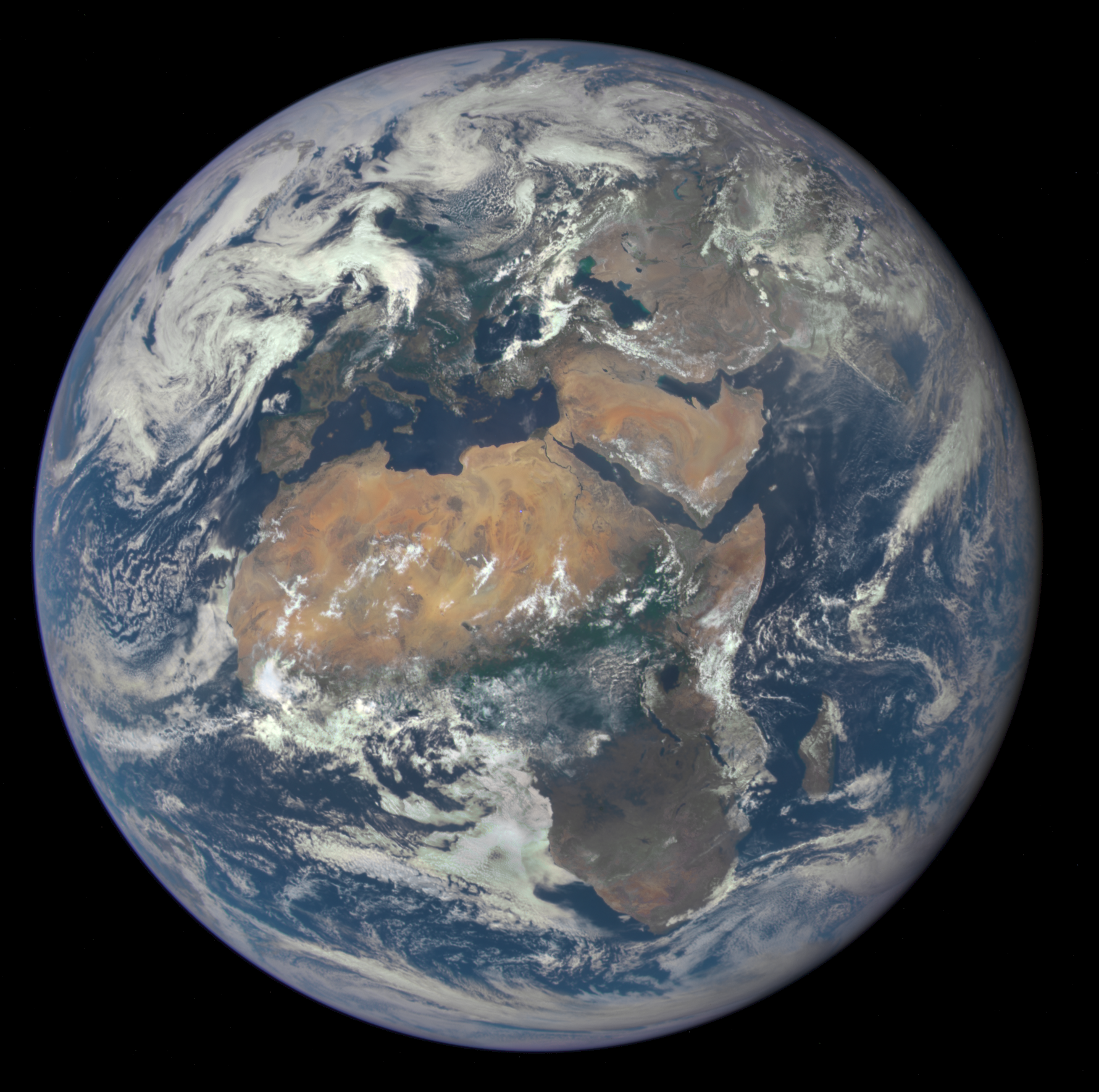
Humans have pumped so much groundwater out of the earth that it measurably shifted the planet's rotational pole, according to a study published June 15, 2023, in the American Geophysical Union's journal Geophysical Research Letters.
The research, led by geophysicist Ki-Weon Seo of Seoul National University, found that redistributing roughly 2,150 gigatons of groundwater between 1993 and 2010 — water pumped from underground and ultimately flowing into the oceans — tilted Earth's geographic rotational pole nearly 80 centimeters (about 31.5 inches) eastward over that 17-year period, drifting at a rate of about 4.36 centimeters per year, according to the AGU's press release on the findings.
"Our study shows that among climate-related causes, the redistribution of groundwater actually has the largest impact on the drift of the rotational pole," Seo said, according to the AGU. "I'm very glad to find the unexplained cause of the rotation pole drift."
How the model closed the gap
Seo's team modeled the observed drift of Earth's rotational pole against known contributors to water-mass movement — first accounting only for melting ice sheets and glaciers, which left a gap of about 78.5 centimeters between the model and the pole's actual observed movement, according to ScienceDaily's coverage of the study. The model only matched the real-world drift once the researchers added in scenarios for groundwater redistribution, according to the AGU. The 2,150 gigatons of extracted groundwater is separately estimated to be equivalent to more than 6 millimeters (about 0.24 inches) of global sea level rise.
Seo described the finding as carrying a double edge, according to ScienceDaily's account: "On the other hand, as a resident of Earth and a father, I'm concerned and surprised to see that pumping groundwater is another source of sea-level rise." The study itself was published under the title "Drift of Earth's Pole Confirms Groundwater Depletion as a Significant Contributor to Global Sea Level Rise 1993-2010" in Geophysical Research Letters, a title that frames the sea-level finding, not just the pole-drift measurement, as the paper's central contribution.
Where the water moved from
Most of the redistributed groundwater came from pumping in western North America and northwestern India, the AGU reported — both midlatitude regions, where the study found that water-mass shifts have an outsized effect on the position of Earth's spin axis. Surendra Adhikari, a geophysicist at NASA's Jet Propulsion Laboratory and a co-author on related NASA-funded research into the pole's drift, called the groundwater contribution "pretty significant." Adhikari's own earlier work had linked a sudden eastward acceleration in the pole's drift, beginning around 2000, to a combination of faster melting of the Greenland and Antarctic ice sheets and groundwater depletion in Eurasia. "In barely 100 years, human beings have altered the climate system to such a degree that we're seeing the impact on the very way the planet spins," Adhikari said, according to NASA JPL's coverage of the research.
US In News compiled this archived account from contemporaneous coverage of the AGU press release, ScienceDaily's summary, NASA JPL's coverage of related research and the underlying Geophysical Research Letters study. It restores a story originally published on this site in June 2023; figures are as reported at the time.