GOP White House hopefuls move forward as Trump considers a run
Mike Pompeo, Mike Pence and Ron DeSantis all took visible steps toward 2024 within months of leaving office or amid Trump's own uncertainty about running again.
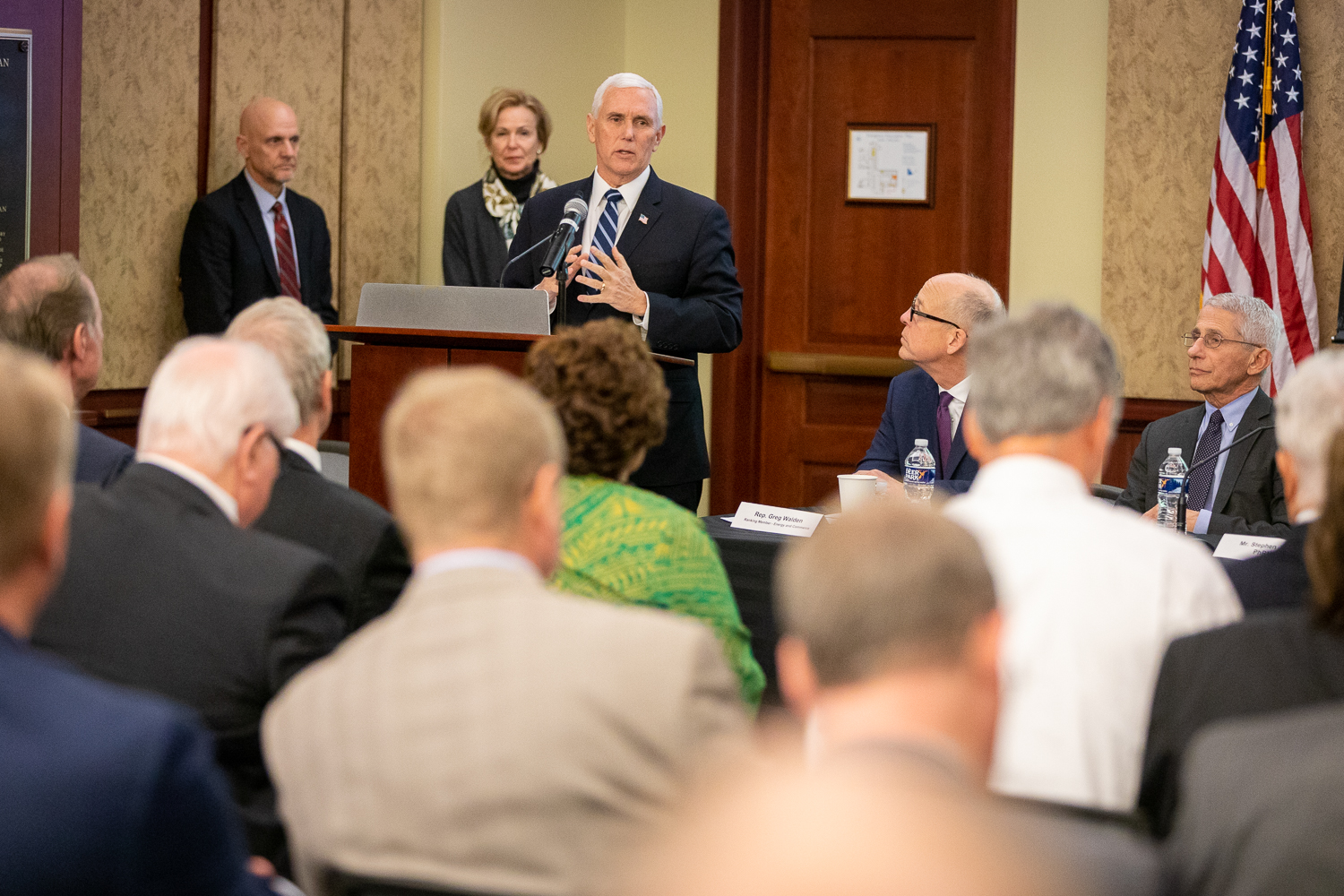
Less than three months after Donald Trump left the White House, prominent Republicans were already positioning for a potential 2024 presidential run, according to Associated Press coverage published April 18, 2021, and carried by outlets including the Boston Globe and the Washington Times.
Former Secretary of State Mike Pompeo kept an aggressive travel schedule through early primary states and signed a contract with Fox News Channel, the AP reported. Former Vice President Mike Pence started a political advocacy group, finalized a book deal and gave his first public speech since leaving office, in South Carolina.
Florida Gov. Ron DeSantis courted donors — including some in Trump's own political backyard — and took a prominent speaking slot ahead of the former president at a GOP fundraising retreat dinner at Mar-a-Lago, according to the same reporting.
The Trump variable
The AP's reporting notes a significant caveat hanging over all of this positioning: former U.N. Ambassador Nikki Haley, described as a top-tier potential 2024 candidate, told the AP she would sit out the race entirely if Trump ran again. Polling cited in the coverage showed Trump remained a commanding figure among Republican voters despite his November 2020 loss to Joe Biden.
What officials and hopefuls signaled
None of the outlets fetched this session quote Pompeo, Pence or DeSantis directly on their 2024 intentions; the moves described — the travel, the book deal, the Fox contract, the speaking slots — were reported as actions rather than declared candidacies. The AP's framing treats these as hedges: public groundwork that would matter only if Trump ultimately stayed out.
What it signals
The pattern described — multiple potential candidates building infrastructure while one dominant figure's plans remain unknown — created a holding pattern in the emerging Republican field: several campaigns-in-waiting, and at least one prominent potential candidate, Haley, who conditioned her own decision entirely on Trump's.
How wide the gap actually was
The scale of Trump's advantage over the rest of the field showed up in straw-poll numbers from that spring: at the Conservative Political Action Conference, Trump took 70% of the vote, with DeSantis a distant second at 21% and every other named Republican, including Pompeo and Pence, registering 1% or less, according to Deseret News' contemporaneous survey of the field. DeSantis fared better in a separate Western Conservative Summit straw poll, narrowly edging Trump there, but he avoided high-profile stops in early-voting Iowa that spring specifically to limit speculation about his own 2024 ambitions, per the same reporting.
Pence made his own positioning more explicit two months later, telling a Reagan Presidential Library audience in June, "The Republican Party will always keep our oath to the Constitution, even when it would be politically expedient to do otherwise" — language reported at the time as an implicit contrast with Trump's continued disputes over the 2020 election. Nikki Haley, for her part, moved from earlier criticism of Trump toward a more combative, Trump-aligned tone by that June, telling an Iowa Republican Party dinner crowd, "We have to be tough about how we fight ... the days of being nice should be over."
Where Pompeo put his money
Beyond the travel schedule and Fox News contract, Pompeo built out a political vehicle of his own that spring, promoting his Champion American Values PAC (CAVPAC) through an active social-media push aimed at early-state Republicans, according to Deseret News' reporting — groundwork consistent with a campaign-in-waiting rather than a television commentary career alone.
US In News compiled this archived account from contemporaneous Associated Press coverage carried by the Boston Globe and the Washington Times, with additional detail on the same spring 2021 positioning drawn from Deseret News' contemporaneous survey of the field. It restores a story originally published on this site in April 2021; figures are as reported at the time.