3D muscle reconstruction reveals 3.2 million-year-old 'Lucy' could stand as erect as modern humans
A digital reconstruction of 36 leg muscles on the famous Australopithecus afarensis fossil found she could straighten her knees and extend her hips much like people today, a Cambridge researcher reports.
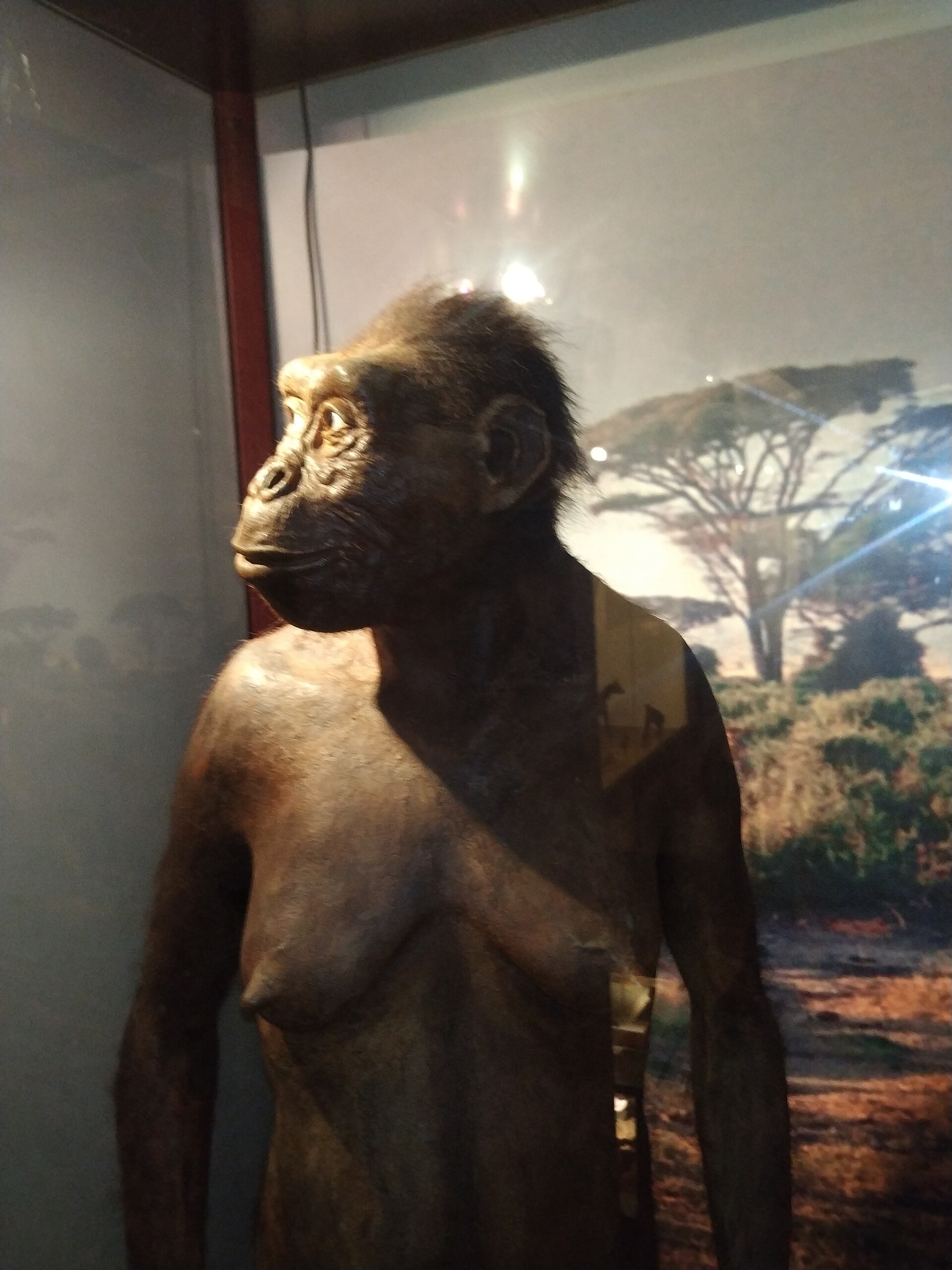
A new digital muscle reconstruction of "Lucy," the 3.2 million-year-old Australopithecus afarensis fossil, found she was capable of standing fully erect with straightened knee joints, much like modern humans, according to research published June 14, 2023 in the journal Royal Society Open Science and covered by ScienceDaily and Archaeology News Online Magazine.
Dr. Ashleigh Wiseman of the University of Cambridge's McDonald Institute for Archaeological Research digitally reconstructed 36 muscles in each of Lucy's legs using MRI and CT scans of modern humans to map muscle pathways, combined with a virtual skeletal model of Lucy and the muscle scarring visible on her fossilized bones, per the Cambridge research release and ScienceDaily's coverage.
The reconstruction is not a direct measurement of soft tissue, which does not survive fossilization over millions of years — it is a model built from comparative anatomy and inferred muscle attachment points. The retrieved coverage does not specify a margin of error for the leverage estimates or address competing reconstructions of Australopithecus locomotion in detail.
What the reconstruction found
The models showed Lucy's knee extensor muscles provided leverage for full knee extension comparable to modern humans, supporting fully erect bipedalism rather than a crouching, bent-knee gait sometimes attributed to early hominins. Her major leg muscles were modeled as more than twice the size, relative to modern humans, and less fatty, according to the Cambridge release.
The researcher's framing
Lucy's ability to walk upright can only be known by reconstructing the path and space that a muscle occupies within the body.
We are now the only animal that can stand upright with straight knees. Lucy's muscles suggest that she was as proficient at bipedalism as we are.
Both quotes are attributed to Dr. Ashleigh Wiseman in the Cambridge University research release and echoed in ScienceDaily's coverage of the same paper.
What it signals
The findings add to a body of research suggesting Australopithecus afarensis combined efficient upright walking with a continued ability to climb trees, indicating the species moved between forest and grassland habitats in East Africa roughly 3 to 4 million years ago, according to the source coverage. The retrieved reporting does not detail how this specific reconstruction was received by other paleoanthropologists studying the same fossil.
US In News compiled this archived account from contemporaneous coverage by ScienceDaily and the University of Cambridge's research communications office. It restores a story originally published on this site in June 2023; figures are as reported at the time.